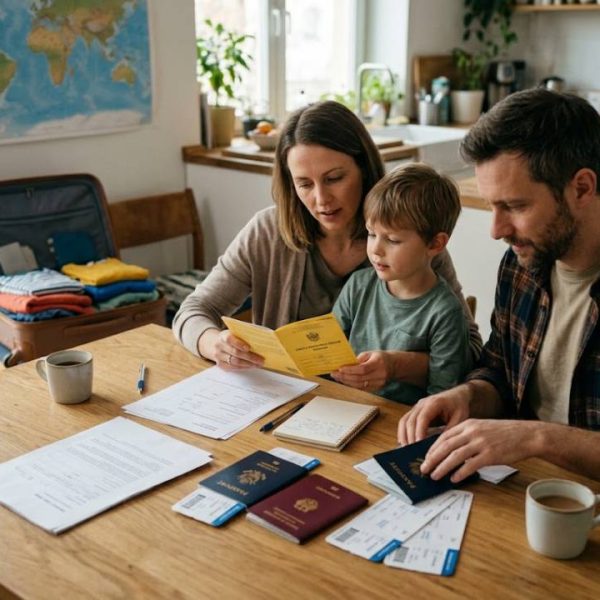
A vaccination record looks like a simple document. A few dates, some product names, a stamp from a clinic. Yet when a family moves abroad, a student applies to a foreign university or a nurse takes a job in another country, this small booklet suddenly becomes one of the most important papers in the file.
Schools, employers, universities and health services often need to know exactly which vaccines a person has received, and when. If the record is in a language they cannot read, it may as well not exist. That is why accurate translation of vaccination records matters far more than most people expect.
Who asks for translated vaccination records
Requests usually come from a handful of situations:
- School enrolment for children moving to a new country, where proof of routine childhood immunisations is often required
- University admission, especially for students living in campus housing or studying health sciences
- Healthcare jobs, where doctors, nurses and care workers must prove immunity to diseases such as hepatitis B, measles and tuberculosis
- Immigration processes, which in some countries include a medical examination and vaccination review
- Travel to regions where certain vaccines are recommended or required
Each institution has its own rules, but they share one expectation. The information must be clear, complete and verifiable.
Why these documents are tricky to translate
Vaccination records are dense. They mix handwritten entries, abbreviations, brand names, batch numbers and dates in local formats. A German "Impfpass", a French "carnet de santé" and a Brazilian "caderneta de vacinação" all follow different layouts and conventions.
Several details deserve close attention:
- Vaccine names. The same vaccine can be sold under different brand names in different countries. Translators need to identify the product and, where helpful, add the generic name or the diseases it protects against.
- Abbreviations. Combinations such as DTaP, MMR or local equivalents must be rendered so that a doctor abroad understands them instantly.
- Dates. Day-month-year and month-day-year formats are easily confused. A single error can make a child appear overdue or vaccinated before birth.
- Handwriting. Many entries are handwritten by busy clinic staff. Illegible notes need to be flagged rather than guessed.
- Stamps and signatures. These confirm authenticity and must be described in the translation.
Accuracy is a health issue, not just a formality
An incorrect translation can lead to real consequences. A child might receive an unnecessary extra dose, or worse, miss a vaccine because a doctor believes it was already given. An employer might reject a qualified nurse because the record seems incomplete.
Our article on why accuracy matters in medical translation looks at this risk more broadly, from discharge summaries to clinical reports. Vaccination records are a good everyday example of the same principle.
Understanding the destination country's schedule
Immunisation schedules differ between countries. Some vaccines are routine in one place and optional in another. The timing of doses can also vary. Health authorities publish their recommendations, and in the United States, for example, the CDC vaccines and immunizations pages explain the recommended schedules for children, adolescents and adults.
A translator does not decide whether a record meets these requirements. That is the job of a doctor or school nurse. But a clear, well-structured translation makes their assessment faster and more reliable.
What a good translation looks like
A professional translation of a vaccination record usually includes:
- a faithful translation of every entry, including dates, vaccine names and dose numbers
- a table layout that mirrors the original, so entries can be compared side by side
- translator's notes where a brand name or abbreviation needs clarification
- a description of stamps, seals and signatures
- a certification statement confirming accuracy, when the receiving institution requires it
Consistency with other documents is essential. The name and date of birth on the translation must match the passport exactly, including accents and spelling.
Records like vaccination booklets show how much depends on getting every small document right. Behind the scenes, agencies are refining how they handle this work, pairing AI tools that speed up drafting and consistency checks with translators who verify names, dates and medical terms — a balance explored in this overview of document translation services for agency teams. For families and professionals, that combination of speed and human oversight is what makes a translated record trustworthy.
Choosing the right provider
Vaccination records sit at the intersection of medical and official documents. They need translators who understand medical terminology and also know what schools, universities and immigration offices expect. A specialised provider of medical document translation will usually work with linguists who have a healthcare background and can handle both the terminology and the certification.
When comparing options, ask whether the provider can deliver certified translations, how quickly they work, and whether they handle data in line with privacy regulations. Health information is sensitive and deserves careful protection.
Practical tips before you order
A few simple steps make the process smoother:
- Scan every page of the record, including covers and pages with stamps only.
- Check with the receiving institution whether they need a certified translation.
- Ask your doctor for a printed summary if the booklet is damaged or hard to read.
- Translate records for all family members at once to keep the format consistent.
- Keep both digital and paper copies for future use.
A small document with a big role
Vaccination records rarely get much attention until they are needed. When they are, they can decide whether a child starts school on time, a nurse begins a new job or a student moves into campus housing. A careful, professional translation turns a confusing booklet into a clear, trusted document that opens doors in a new country.